Montreal mayor says city will offer 3,000 spots in emergency shelters for unhoused
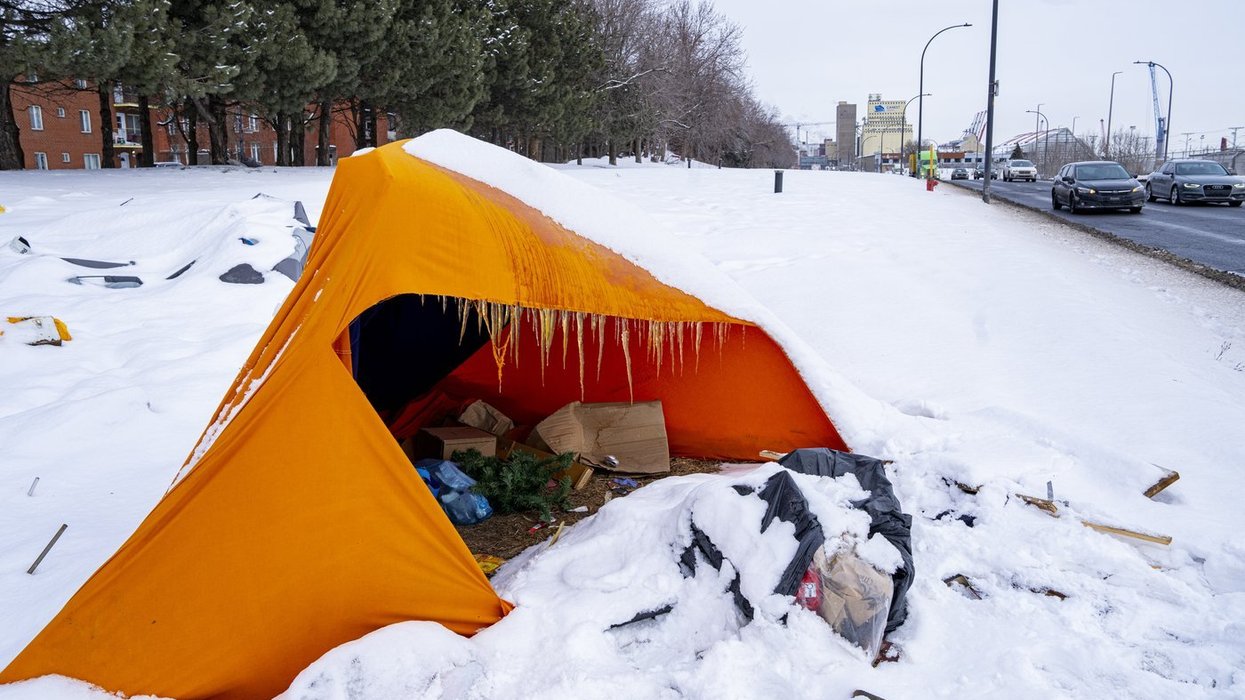
Montreal Mayor Soraya Martinez Ferrada said the city is planning to provide about 3,000 spots in emergency shelters to address what she calls the biggest humanitarian crisis the city is facing: homelessness.
"I won't leave anybody in the street to die from the cold. That's my promise. So whatever we need to do, we'll do it," she said at a news conference Thursday.
The city will set up the 3,000 spots in nine winter warming centres, open 24/7, in seven of its boroughs. Martinez Ferrada says that shelters must be able to provide round-the-clock services, rather than requiring vulnerable individuals to move from one location to another throughout the day.
The mayor said some of the 3,000 spots would be chairs, and was unable to confirm how many would be beds.
She said the city purchased 350 new beds for the new emergency warming centres, which she said were needed since many people who used emergency shelters in recent years had to sleep on chairs.
"Everyone deserves to sleep in a bed," she said.
The anticipated 3,000 spots are in addition to existing shelters and resources for the unhoused run by community organizations.
The city is not planning to add any new emergency beds in the Hochelaga neighbourhood in the east-end of Montreal, which currently has an encampment with about 200 tents.
It said it wants to ensure resources for those experiencing homelessness are distributed more evenly across the Montreal area.
Last November, the city had about 2,500 spots in emergency shelters and warming centres. Martinez Ferrada had said her administration added 500 added spaces by Christmas, for a total of about 3,000 spots.
"No other city in Quebec has this much capacity," said the mayor.
The Quebec government estimated there were just over 12,000 people living on the street in the province in 2025, and that about 42 per cent of the province’s unhoused population lives in Montreal.
According to the mayor, Montreal needs about $20 million to put its emergency plans in place.
"I really do hope that this is the last winter that we'll be waiting for funding, knowing that the winter comes every year. Community organizations need that certainty to retain their teams and workforce and plan ahead," she said.
She added that she believes the city will get the funding it needs after the premier-designate, Paul St-Pierre Plamondon, promised to make homelessness a top priority.
The city's announcement comes after a woman died in an encampment in the Montréal-Nord borough early Wednesday following a fire.
"It kept me awake two nights in a row to think about what we can do more, and how to do it faster," the mayor said.
St-Pierre Plamondon reacted to the news of the death on social media Wednesday, saying he is "making the fight against homelessness a personal matter." He wrote that his government will provide the funding needed for this winter. At a separate news conference on Thursday, Prime Minister Mark Carney said he would collaborate with the incoming Parti Québécois government on the issue.
Representatives of community organizations say they welcome the additional resources to tackle a problem they say is becoming increasingly complex. However, they say all levels of government need to commit to building more transitional housing and fund services like addiction treatment centres and mental health support to get people off the street.
The mayor called on the government to increase funding for transitional housing, adding that the city is working on building 2,000 units.
Sam Watts, CEO of the Welcome Hall Mission, told reporters that the city has been efficient at planning ahead but that there is a need for permanent solutions.
"We don't want anybody to be born in the street or die in the streets, but I also don't anybody to live in the street," he said. "You heard the word transition housing over and over again. That is really the solution, to get people … back into permanent housing rather than a whole series of emergency measures, which are very costly."
Émilie Fortier, director of homelessness services at the Old Brewery Mission, said that rent and housing prices are an additional barrier, with affordable units becoming harder to find.
This report by The Canadian Press was first published Oct. 8, 2026.
By Erika Morris | Copyright 2026, The Canadian Press. All rights reserved.