Party leaders questioned on potential alliances on Day 26 of Quebec election campaign
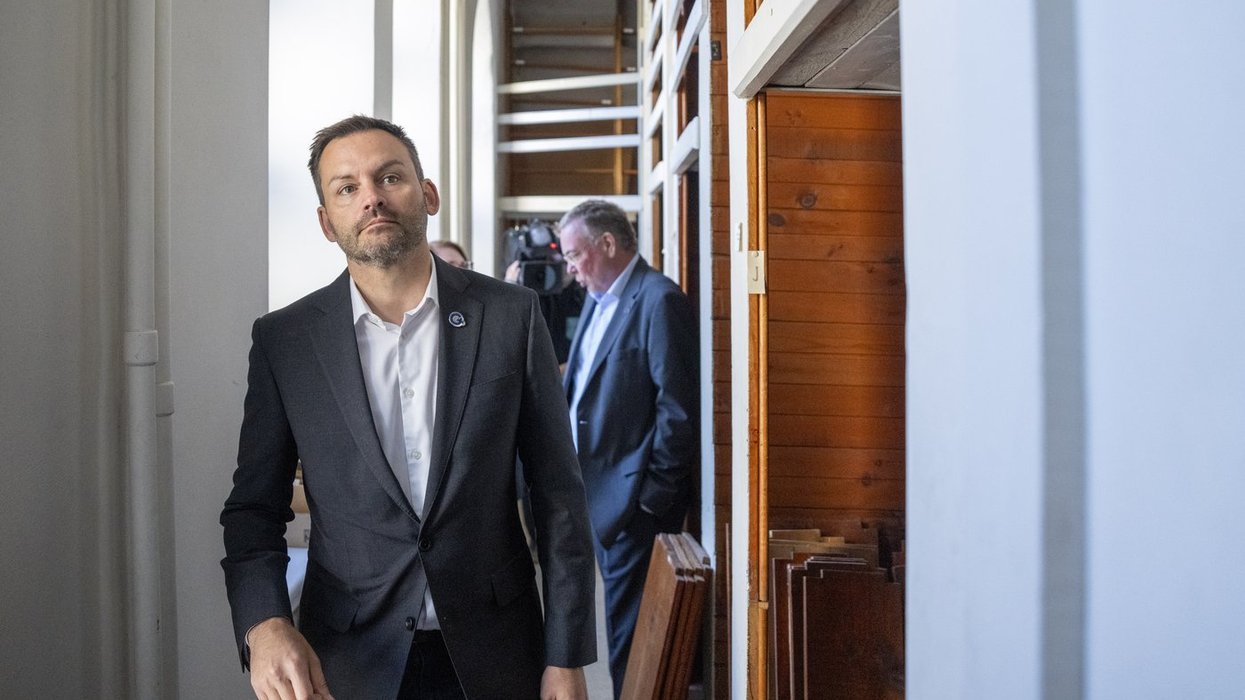
Leaders of Quebec's political parties on Monday ruled out forming alliances with their opponents to govern, as polls point to a possible minority outcome with two weeks to go before the Oct. 5 provincial election.
Parti Québécois Leader Paul St-Pierre Plamondon said he's not looking at forming an alliance with the Quebec Conservatives, or any other party, as opponents continued to try to paint his party and Éric Duhaime's with the same brush.
"Allying with anyone else is absolutely out of the question," he told reporters on Monday.
Coalition Avenir Québec Leader Christine Fréchette doubled down on suggestions that the PQ and the Conservatives are ideologically aligned in areas such as economic austerity.
She called St-Pierre Plamondon the "leader of the Quebec Conservative Parti Québécois," and said that "cuts to public services now appear to be a rallying point for the Conservative Party and the Parti Québécois.
Québec solidaire co-spokesperson Ruba Ghazal also said she saw an increasingly obvious "compatibility" between the two parties.
St-Pierre Plamondon, in response, accused his rivals of trying to "spin" the narrative to cover up a lack of ideas.
"What worries me is that parties are already into negative campaigns, when we're two weeks from the vote," he said.
The Parti Québécois continues to lead the race in public opinion surveys heading into the campaign's final stretch, but poll aggregator Qc125 suggests a minority government as the most likely scenario.
Fréchette initially did not directly answer a question about whether she's open to potential alliances, but said it was clear Quebecers don't want a referendum on sovereignty.
Later in the day, she clarified to say that she didn't foresee an alliance, "not with the Liberals, not with any other party."
Liberal Leader Charles Milliard, meanwhile, says he doesn't identify with any of the rival parties and is going "all in" on winning.
Ghazal, for her part, suggested a collaboration with Duhaime's Conservatives was unlikely.
"What we want is very strong public services, and that doesn't mean hacking at them with a chainsaw, like he proposes," she said. "The others want to cut."
The Conservative leader ruled out a formal coalition, but said the parties should all be open to working with one another to advance Quebecers' interests, especially in a legislature where no party has a majority.
"Quebecers don't send a government (to the legislature) to be dysfunctional," he said. "They send them there so there's more collaboration."
Both Fréchette and Milliard made visits to Quebec businesses in order to highlight their parties' economic plans, while Ghazal and St-Pierre Plamondon both visited a housing project aimed at children exiting the youth protection system. Duhaime was also in Montreal, where the third and final leaders debate will take place on Wednesday.
This report by The Canadian Press was first published Sept. 21, 2026.
Copyright 2026, The Canadian Press. All rights reserved.