Parti Québécois leader still top of polls as election day nears
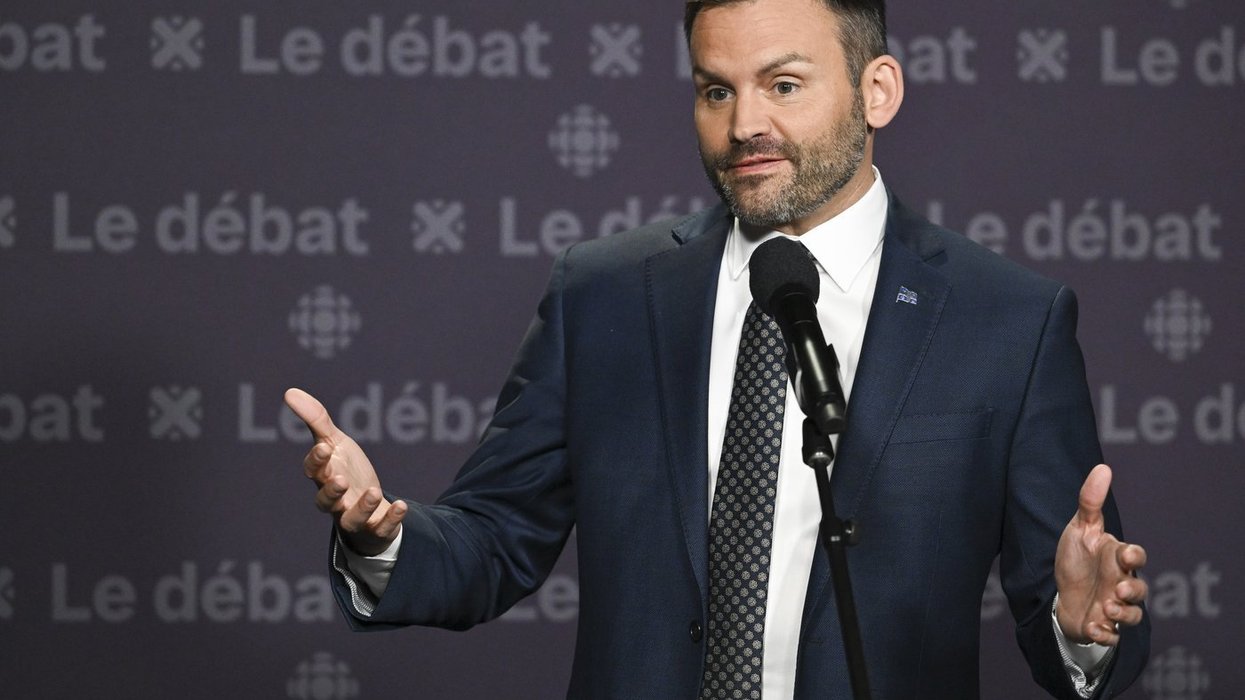
Parti Québécois Leader Paul St-Pierre Plamondon had his work cut out for him after the 2022 election.
His party only won three seats and watched as the Coalition Avenir Québec won a second majority government, presenting itself as a “third way” between federalism and sovereignty.
Four years later, the leader of the separatist party is poised to bring his party back to power on Oct. 5, setting the table for a third referendum on independence in Quebec.
The PQ hasn't been in power since former premier Pauline Marois' minority government dissolved in 2014.
Historically known as a social-democrat party whose raison d’être was to separate from Canada, the PQ struggled to connect with voters in elections over the next decade.
However, the party won four more seats in byelections before the legislature was dissolved in August and is now considered the front-runner in a race where the vote is being split among five parties.
St-Pierre Plamondon won the PQ leadership in 2020 after promising to hold a referendum if the party formed government. Just before this year's electoral campaign period began, St-Pierre Plamondon said he would wait until American President Donald Trump is out of the White House to do so.
He said he wanted to “defang” his Liberal, Conservative and Coalition Avenir Québec rivals, who insisted that a referendum would only add to the political instability caused by trade tensions with the United States.
“People oversell the instability of going and voting on (separation),” St-Pierre Plamondon said during an interview in English on CJAD’s airwaves on Oct. 1, in which he urged Quebecers to give him a majority government.
The Quebec election is scheduled just two weeks before Alberta holds its own referendum on the possibility of separation.
“People are going to vote. And nobody thinks there’s any danger in going to vote and being in a democracy,” St-Pierre Plamondon said in the radio interview.
But while the PQ leader is now an ardent separatist, he once accused the independence movement of having “split Quebec in two.” He said his experiences as a lawyer and meetings with former PQ politicians led him to change his mind.
He donated over $2000 to the Liberal Party of Canada between 2004 and 2008. A spokesperson would later say he made the donations during a period when he was a corporate lawyer at Stikeman Elliott, while attending fundraisers tied to his work at the firm.
He also worked on lawsuits stemming from the federal sponsorship scandal that erupted over a program introduced while former prime minister Jean Chrétien was in power. Sometimes describing himself as a "disappointed federalist," St-Pierre Plamondon later joined the PQ in 2016 under former cabinet minister and party leader Jean-François Lisée.
He made headlines after the 2022 election, when he refused to swear the oath to the King. The government passed a bill making the oath optional soon after, allowing him to sit at the legislature.
During his campaign, he once again attacked the British monarchy, calling it a symbol of “domination by force,” and pledging to defund the office of the lieutenant-governor, which represents the King in Quebec.
The PQ leader has described himself as “spontaneous,” admitting to sometimes speaking to media without considering possible backlash. Meanwhile his rivals deem him to be “hotheaded,” “belligerent,” and “quarrelsome.”
The father of three has also said he has found the campaign difficult since it has forced him to be away from his children for days at a time.
Throughout the campaign, the PQ leader leaned on nationalist sentiment and a desire for change to drum up support from those who were disillusioned after eight years of the governing Coalition Avenir Québec.
He also relied on identity politics and linked “uncontrolled immigration” to problems such as the housing crisis, the decline in the French language, the struggling education system and strain on public services.
Québec solidaire co-spokesperson Ruba Ghazal compared St-Pierre Plamondon to former premier François Legault, who won two consecutive majority governments by making language, identity and autonomy core governing themes.
But St-Pierre Plamondon’s detractors did little to stop his momentum during the campaign.
Polls initially suggested Quebec was heading toward a minority PQ government. But by the end of the campaign, support for the Coalition Avenir Québec seemed to tank, opening the door for the PQ to win a majority due to a fragmented political landscape that could see five parties winning seats on Monday night.
The PQ leader has also downplayed his plans for a referendum in the last stretch of the campaign, noting that he believes voters will need to decide who they want to trust to lead Quebec.
"It's not totally accurate to say that this election is only about whether we would hold a referendum in three years from now," he told CJAD. "It's about changing or not changing a government that has catastrophic results in many areas of our society and choosing who could do a good job and who could be reliable in terms of what they do and what they say."
This report by The Canadian Press was first published Oct. 4, 2026.
By Erika Morris | Copyright 2026, The Canadian Press. All rights reserved.