Christine Fréchette steps down as Coalition Avenir Québec leader
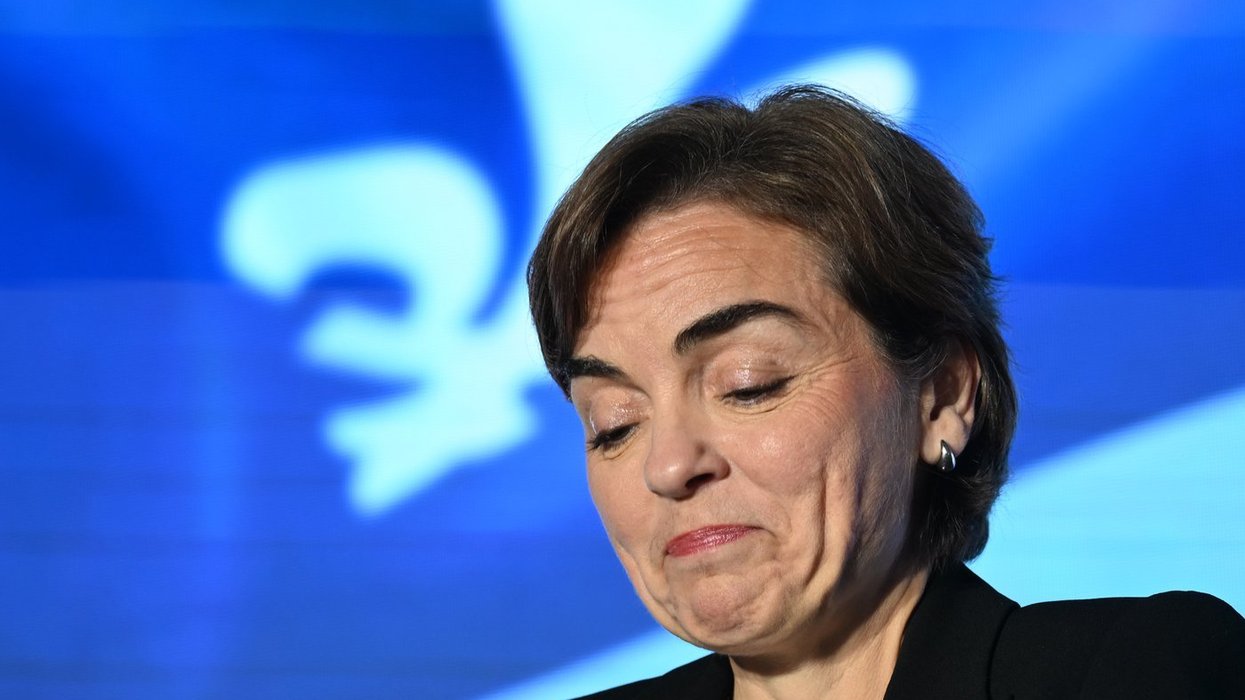
Outgoing Quebec Premier Christine Fréchette says she is leaving politics with her head held high despite a crushing defeat in Monday's provincial election.
She told reporters she had resigned as leader of the Coalition Avenir Québec on Tuesday afternoon, less than a day after her party failed to win any seats.
"I accept Quebecers' decision and take responsibility for the results," she said at a news conference in Quebec City. "Serving Quebec has been the greatest honour of my life."
The CAQ, founded in 2011, was in power for eight years in Quebec and held 79 seats in the provincial legislature before Fréchette triggered the election campaign in August. But the Parti Québécois capitalized on voters' desire for change, winning enough seats in the election to form a minority government.
Fréchette said she would remain as premier until the premier-designate, PQ Leader Paul St-Pierre Plamondon, is sworn in.
Fréchette spent about six months as premier, after replacing François Legault as leader of the CAQ in April. Legault had stepped down in January after the party tanked in the polls.
But Fréchette attempted to breathe new life into the party, and seemed to gain some momentum by claiming her governing party was best placed to weather the effects of American tariffs. A few days before the campaign was launched, polls suggested her party neck-and-neck with the PQ.
Throughout the campaign, she also said that Quebecers needed the CAQ's approach as a so-called "autonomist" party, suggesting it was allowing the province to make more gains by shunning the old labels of federalists and sovereigntists. She championed the party as being "nationalist, economic and pragmatic."
But the approach opened her up to criticism from her rivals who noted how she had repeatedly declined to say how she would vote if there was another referendum on sovereignty. Conservative Leader Éric Duhaime, whose party made historic gains, repeatedly accused her of being a closet separatist. Fréchette had previously worked as a staffer for the PQ.
"I remain deeply convinced that the third way is the right way for Quebec," Fréchette said. "When it comes to defending and promoting Quebec’s interests, we must do so in our own name, by ourselves, for ourselves."
The CAQ had also been mired in scandals throughout its second mandate, from major investments into failing projects to massive cost overruns for the digitization of government services. Fréchette acknowledged that her party struggled to shake off that baggage.
Legault defended Fréchette's efforts on social media, saying she has been "a competent minister and premier."
"She showed a great deal of courage during this election campaign. She is not responsible for the 'wear and tear of power' that affects all governments," he wrote.
Fréchette was first elected under the CAQ's banner in 2022. She served as immigration minister before taking over the energy and economy portfolio.
She is the first woman to serve as premier since PQ leader Pauline Marois, who won a minority government in 2012. Fréchette said she hopes her short time in office will open the door to more women in political leadership roles.
"Quebec was led by women for a total of 25 months in 159 years," Fréchette said. "It's too little."
Experts are divided on whether the CAQ can survive after being wiped off the political map following a vote that handed the sovereigntist Parti Québécois a minority government.
Thierry Giasson, a political science professor at Université Laval, says many Quebecers still believe in the CAQ's core autonomist position.
"It could survive because there are people who believe in this idea of a third way, who have championed it, and who will likely want to ensure that it survive," he said.
His colleague André Bodet agrees, saying the PQ was also expected to disappear after the last election.
"The Coalition Avenir Québec is not a fringe party in Quebec politics; on the contrary, it has governed for two terms," he said. "Today’s electorate is primarily looking for charismatic leaders."
But Martin Papillon, a political science professor at Université de Montréal, points out that Legault did not have the same deep historical roots. Without a single seat, the party is fragile, he adds.
"It will become very difficult for that party to survive, especially since it is a coalition of people who have or had political ties elsewhere and who may return to their former parties, just as voters have decided to do," he said.
The CAQ has 30 days to name an interim leader. A spokesperson for the party said meetings will be held in the next few days to determine next steps.
This report by The Canadian Press was first published Oct. 6, 2026.
— With files from Pierre St-Arnaud in Montreal
By Erika Morris | Copyright 2026, The Canadian Press. All rights reserved.