9 Canadian provinces just agreed to scrap interprovincial alcohol barriers — but not Quebec
Quebec is the only province that hasn't signed on.
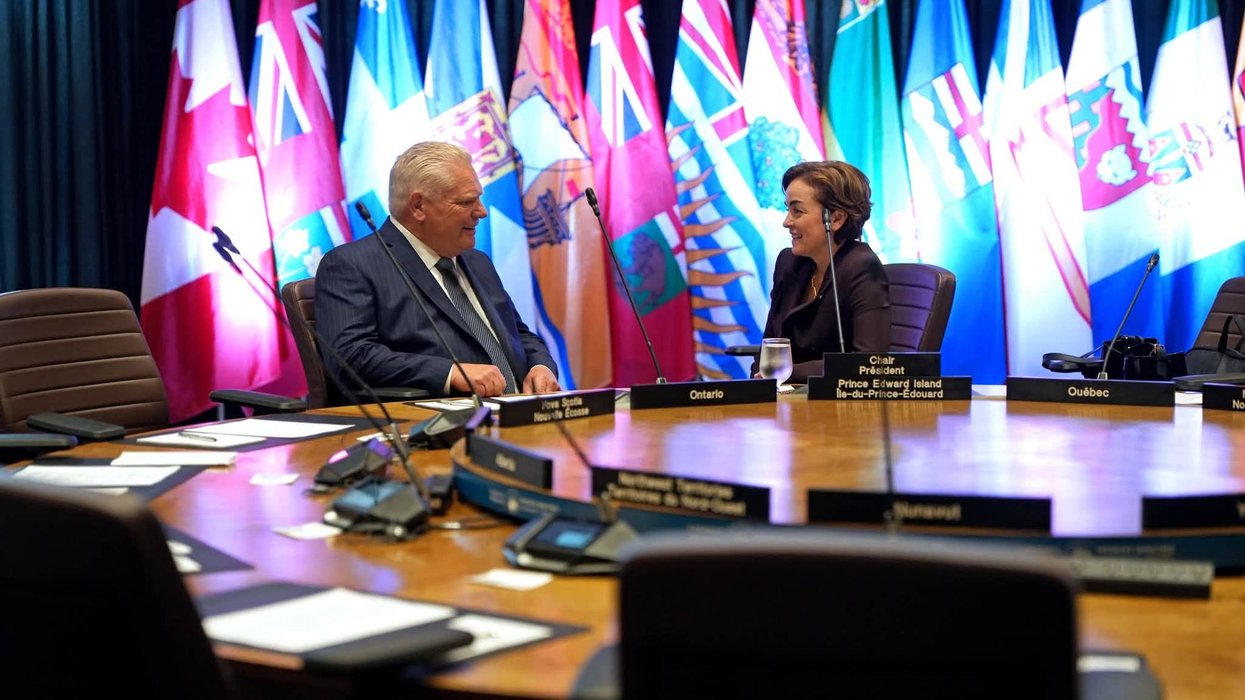
Ontario Premier Doug Ford chats with Quebec Premier Christine Fréchette at a premiers' meeting in P.E.I.
The premiers of nine provinces announced Tuesday that they're removing major barriers to interprovincial sales of alcohol.
Provincial rules will be changed to allow brewers and distillers to sell alcohol directly to consumers, regardless of jurisdiction.
The agreement knocks down a number of trade barriers across the country. Direct-to-consumer sales of beer, wine and spirits manufactured in one province and shipped to consumers in another have been largely governed by item-specific agreements between provinces or were effectively prohibited.
"Canadians can get the benefits of these products, strengthening internal trade — being our own best customer at a time when it really matters," New Brunswick Premier Susan Holt told reporters in Charlottetown, where premiers are meeting this week.
New Brunswick and Manitoba had already dropped the barriers before Tuesday’s announcement.
But not all provinces signed on.
The premiers of Quebec, the Yukon, the Northwest Territories and Nunavut didn't sign the deal. However, a statement released by those who did sign said Quebec and the Yukon were working to join in the near future.
The new trade system is effective immediately, but British Columbia said it is aiming for next February to get regulations in place.
Tuesday's deal stems from a memorandum signed by all the provinces and the Yukon in 2025 to take action on the file.
The new agreement comes after U.S. President Donald Trump announced this week a plan to implement steep tariffs on Canadian beer, wine and spirits.
Ontario Premier Doug Ford and Nova Scotia Premier Tim Houston said those new duties mean it's more important than ever for governments to build an economy free of interprovincial trade barriers.
"Today’s agreement will open new markets and new choice and convenience for producers and customers in Ontario and across Canada," Ford said in a statement.
Alberta Premier Danielle Smith said the same new opportunities are now open to producers in her province. She said the next step will be clearing the way for barrier-free retail sales across the country.
N.W.T. and Nunavut said in a joint statement that they support the goal of knocking down trade barriers but didn't sign Tuesday's deal because "of the unique realities of our territories."
"Many of our communities have locally determined alcohol restrictions or prohibitions that reflect community priorities and cultural values," the statement said.
"Respecting community self-determination is fundamental to how alcohol is managed in the North.”
Industry groups praised the announcement.
Dan Paszkowski, the president of Wine Growers Canada, said they’ve been urging the change for almost two decades.
"Today's agreement is the culmination of years of collaboration between governments and industry and represents a transformational step toward a truly national Canadian wine marketplace," he said in a statement.
The Canadian Federation of Independent Business, or CFIB, said it appreciates that governments want to reduce trade barriers and said a further sign of success will be low or minimal licensing or regulatory fees for direct-to-consumer sales.
Dan Kelly, CFIB's president, also said the premiers should now work on opening up retail sales.
This report by The Canadian Press was first published July 21, 2026.