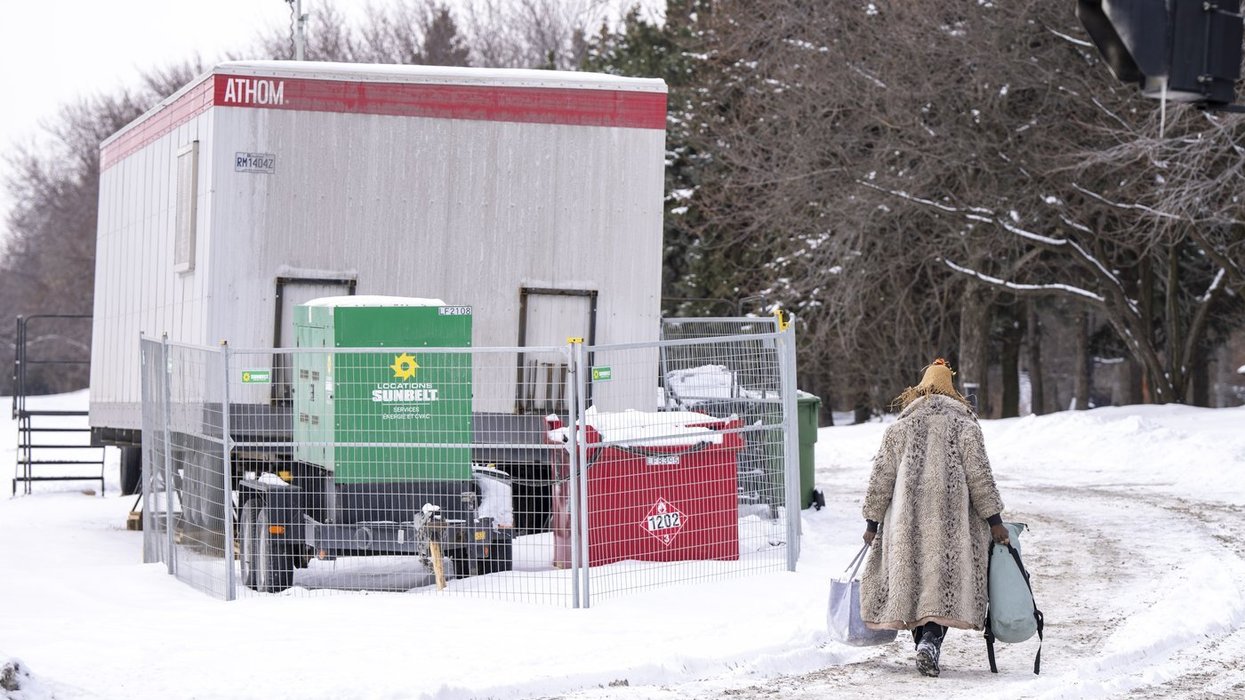
The City of Montreal is planning to spend $1.4 million on emergency services, including trailers for some of the residents living in an encampment with about 200 tents.
Mayor Soraya Martinez Ferrada promised the emergency support on Monday, near an encampment area that stretches out over two kilometres on Notre-Dame Street, in the eastern part of Montreal.
"The ultimate goal is to have options so people don't live in a tent near the highway," Martinez Ferrada said at a news conference by the encampment.
In September, the city estimated there were nearly 180 people living in the encampment that is continuing to expand. The encampment is located in the provincial riding of Quebec Premier Paul St-Pierre Plamondon and became a flashpoint in the last provincial election after police reported a baby was found at the site.
The mayor said the emergency support was a "transitional step" to getting people off the street and into permanent housing. She added that she doesn't want a single tent left in the city's largest encampment by the end of her mandate.
In tandem with community organization L'Anonyme, the city said it would ensure the trailers are open 24/7 and offer various services to help those experiencing homelessness.
The emergency project is expected to include 18 rooms with bunk beds for a total of 36 spots, as well as bathrooms, showers and a kitchenette. A total of 15 beds would be reserved for women and members of the LGBTQ+ community, according to the mayor.
The mayor said the facilities would be up and running in December and would be available to the dozens of people living in the encampment.
"Behind these numbers are people who have no stable, safe place to rest, to take care of their affairs, to feed themselves or find shelter, to receive medical care, or to earn an income. Under these circumstances, facing this alone is an insurmountable challenge," said Sophie Gagon, the urban safety director for L'Anonyme.
Last month, the mayor announced that the city would provide 3,000 emergency shelter spots as part of its winter homelessness response. She also said the city is working to build 2,000 transitional housing units.
The mayor acknowledged that there is not enough space for all those living at the encampment in the trailers, and that not everybody wants to stay in a temporary shelter. She added that the social reality of those living there is very complicated with many dealing with mental health or addiction issues. Others living there are employed but cannot afford rent.
"It's not sufficient," Martinez Ferrada said, noting that the problem goes well beyond what the city has capacity to address.
She says city employees regularly visit the site to offer social intervention and referrals, as do nurses and various community outreach workers. The city also conducts regular "cleanup" sessions at the encampment.
Gagnon says that intervention workers can help those at the encampment take concrete steps to find housing, obtain identification, access income, receive medical care, and reconnect with other resources.
"There is no one-size-fits-all solution," she told reporters.
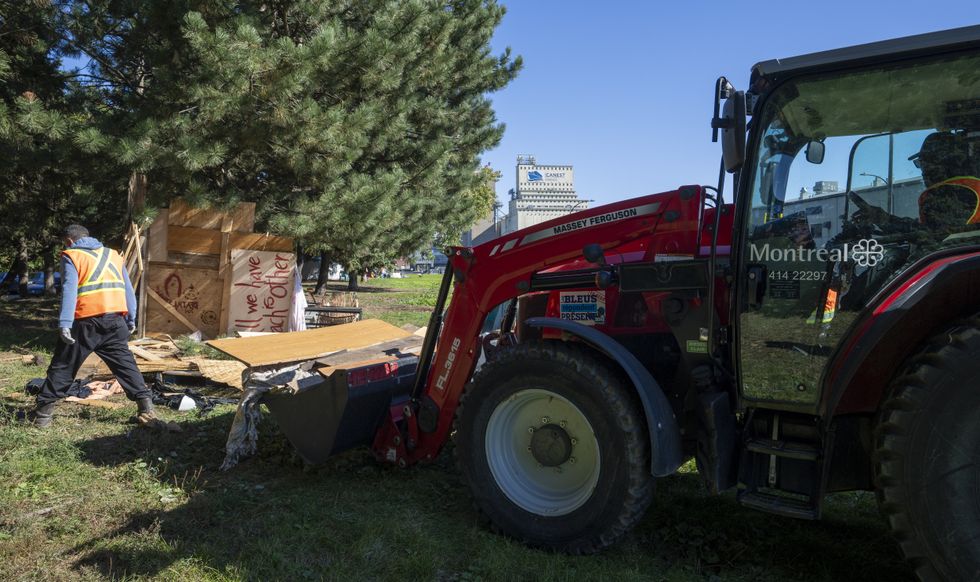 City workers take down a structure in an unhoused encampment on Notre Dame Street in Montreal on Wednesday, Sept. 23, 2026.THE CANADIAN PRESS/Christinne Muschi
The need is urgent, with about 500 people having died while experiencing homelessness in Quebec since 2020, according to the office of the coroner's data. The government counted about 12,000 people living in homelessness in 2025.
In Canada, about 65,000 people are experiencing homelessness, according to the federal government.
But Martinez Ferrada stresses that, with the provincial and federal governments having pledged to make homelessness a priority, she feels hopeful.
She was with Prime Minister Mark Carney on Friday in Winnipeg, when he promised to end homelessness in Canada within 10 years.
The Quebec premier has appointed himself as the minister responsible for addressing homelessness and earmarked $28 million for emergency shelters after being sworn in.
St-Pierre Plamondon has said his government would spend $400 million on adapted housing and $600 million on social and prevention programs over four years. He also promised to build 20,000 new units of social housing, including 2,000 units with services dedicated to those exiting homelessness. The premier has vowed to halve homelessness in the province by 2030.
After the federal government unveiled its 2026 budget last week, Carney said his government will be spending $30 billion over 10 years in a range of complimentary areas as part of its homelessness plan.
That money will go toward 25,000 units of supportive and transitional housing across Canada, as well as integrated support, health infrastructure, and renewing federal housing programs such as the Canada Housing Benefit.
This report by The Canadian Press was first published Nov. 9, 2026.
By Erika Morris | Copyright 2026, The Canadian Press. All rights reserved.