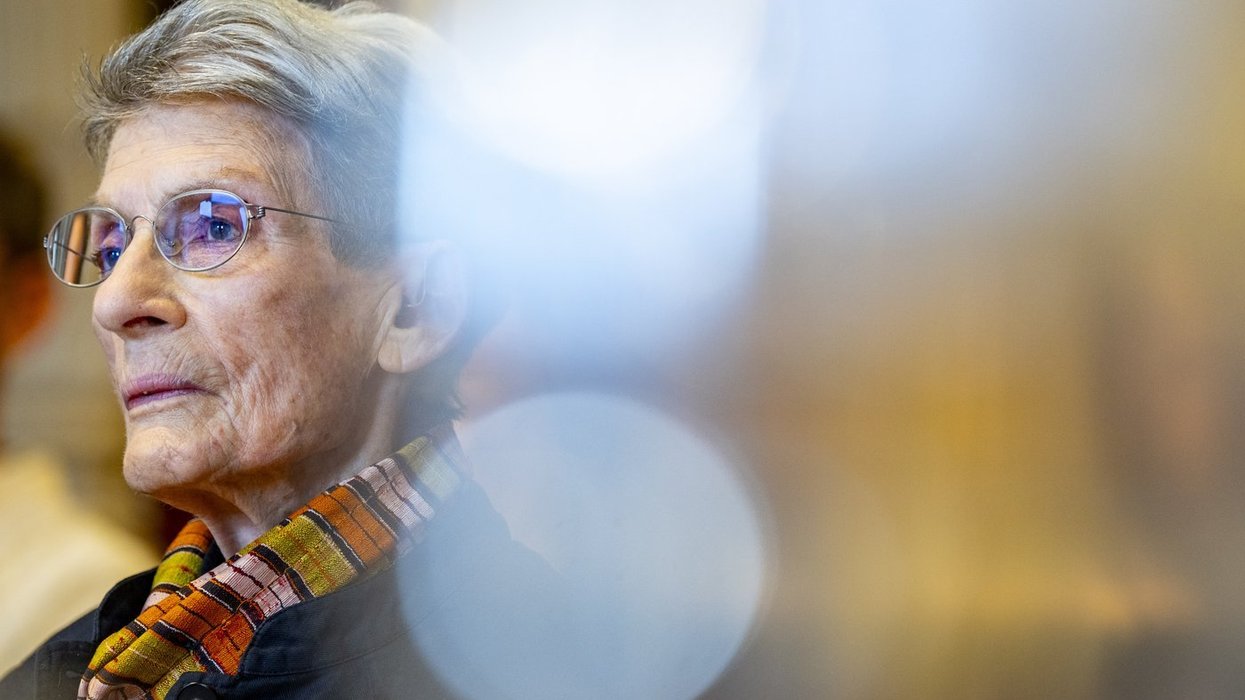
After nearly a century watching Montreal change around her, architect and activist Phyllis Lambert believes citizens need a greater voice in shaping the city's future.
Speaking at a Canadian Centre for Architecture news conference Tuesday, unveiling plans for her centennial, the 99-year-old described Montreal as a “city of communities” and pointed to growing public participation and consultation in decisions about how the city develops.
Lambert, who founded the Montreal-based research institution and museum, became an influential figure in modern architecture through her involvement in the development of New York's landmark Seagram Building. She later became a prominent advocate for heritage preservation and urban issues in Montreal.
Lambert's approach to citizen involvement was shaped in part by her work in the 1970s in Milton-Parc, a central Montreal neighbourhood where residents fought plans to demolish much of the area for highrise redevelopment.
Reading excerpts from her forthcoming memoir, “My First Hundred Years,” Lambert recalled how the experience changed her approach to architecture.
“I often said Milton-Parc was my Yale and my Harvard,” Lambert said. “That’s where I learned to listen to people.”
Lambert said that as a practising architect, she had been accustomed to making decisions and telling others how things should be done.
“I was still an arrogant architect,” she said, adding that working with citizen groups taught her to do things differently and work with the community.
Lambert contrasted the urban challenges she confronted decades ago with those she sees today. In the 1960s and 1970s, she said, urban renewal programs allowed older buildings to be demolished, neighbourhoods to be destroyed and thousands of residents to be displaced.
Today, she said, she is concerned about a lack of vision and know-how in urban planning and stressed the need to work with residents who experience the city's problems every day.
One place on her mind is the historic Villa Maria estate, a 1.7-million-square-foot property in Montreal that has been owned by the Congrégation de Notre-Dame since 1854 and was put up for sale this summer.
Lambert said she is “very worried” about what will happen to the property, pointing to its history and extensive green space.
She said the site should not be transformed by highrise development that comes at the expense of that greenery.
“You need to breathe, you know,” Lambert said, broadening her comments to the importance of preserving open space in the city. “We have the mountain, thank God.”
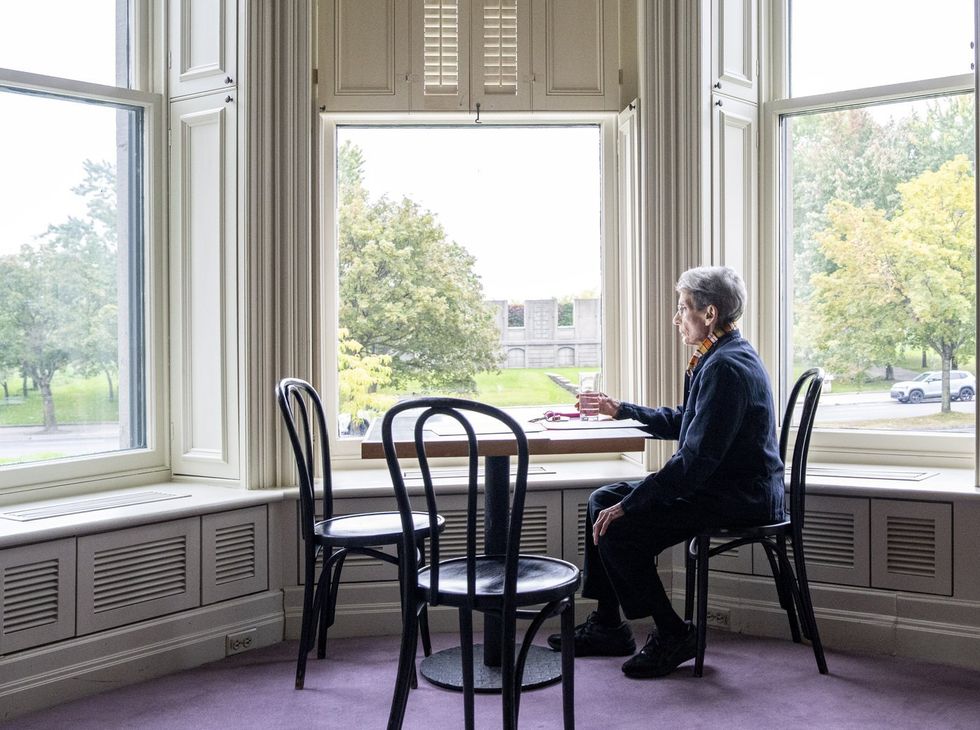 Phyllis Lambert, the 99-year-old founder of the Canadian Centre for Architecture looks over her notes before a press conference announcing a year-long program to mark her upcoming centennial, in Montreal on Tuesday, Sept. 29, 2026.
THE CANADIAN PRESS/Christinne Muschi
Phyllis Lambert, the 99-year-old founder of the Canadian Centre for Architecture looks over her notes before a press conference announcing a year-long program to mark her upcoming centennial, in Montreal on Tuesday, Sept. 29, 2026.
THE CANADIAN PRESS/Christinne Muschi
Lambert's reflections come as she prepares to mark a century of a life closely tied to architecture, urban planning and preservation.
Her memoir, “My First Hundred Years,” is set to be released in January. During Tuesday's event, she read excerpts tracing her career from the Seagram Building to her urban activism and the creation of the Canadian Centre for Architecture.
The centre is also launching a yearlong program to mark Lambert's centennial, with exhibitions, films, publications and public discussions focused on some of the urban issues she has worked on throughout her career.
Among them is a series of conversations called “Speaking of Tomorrow,” which will bring together experts and community voices to discuss issues including housing, development, heritage and the environmental challenges facing cities.
Lambert turns 100 on Jan. 24.
This report by The Canadian Press was first published Sept. 29, 2026.
By Charlotte Glorieux | Copyright 2026, The Canadian Press. All rights reserved.