Quebec Is Getting Nearly 90,000 Fewer Pfizer Vaccine Doses Than Expected By Next Month
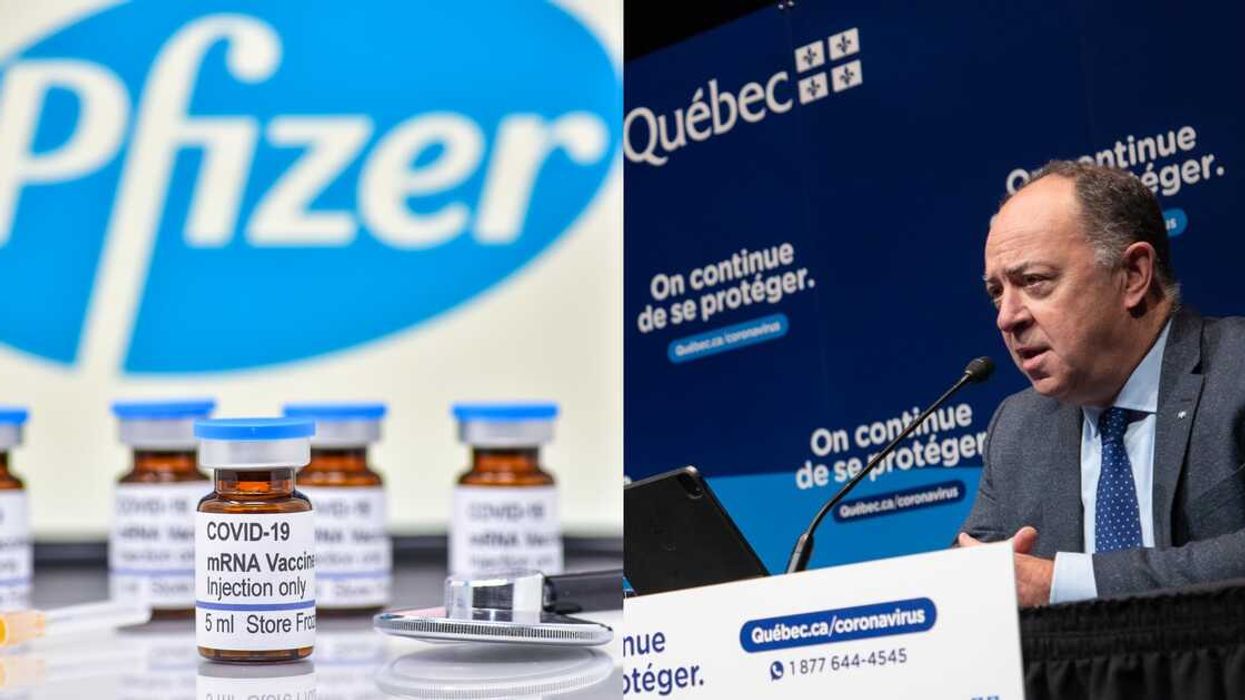
Quebec will be getting about half of the Pfizer-BioNTech COVID-19 vaccine doses it expected to receive by February 8, according to an announcement from the Ministry of Health and Social Services (MSSS) on January 15.
Pfizer shipment delays are impacting the delivery of COVID-19 vaccine doses nation-wide, said Canada's Minister of Procurement Anita Anand, explaining the lag is due to the expansion of the pharmaceutical corporation's European manufacturing capacity.
Editor's Choice: Quebec Is Delaying The 2nd Dose Of The COVID-19 Vaccine & Waiting Longer Than Recommended
49%
Fewer doses delivered to Quebec in the next 3 weeks
According to the MSSS, the reduced production capacity will last at least four weeks.
Quebec was expecting to receive an additional 176,475 doses of Pfizer's vaccine in the next two and a half weeks.
Now, the MSSS is stating that 86,775 of those won't be delivered on time.
The ministry subsequently issued a corrected delivery schedule:
- Week of January 18: 41,925 doses to be received rather than 46,800;
- Week of January 25: 8,775 doses to be received rather than 46,800;
- Week of February 1: 39,000 doses to be received rather than 82,875.
In Quebec, 127,073 doses have been administered to date, including 27,654 to CHSLD residents — nearly 65% of total long-term care residents in the province.
Of the 325,000 caregivers in the province, 94,318 have been given the first dose of the COVID-19 vaccine.
The remaining doses have been administered to family caregivers and to people living in remote or isolated communities, according to the MSSS.
Minister Anand said Pfizer believes it will be able to catch up to expected deliveries to Canadian provinces by the end of March.
This article's cover photo was used for illustrative purposes only.