8 destinations Canadians are urged to avoid in 2026, including 1 very popular hotspot
One of Canadians' favourite vacation spots is considered "off-limits" for next year. 👀
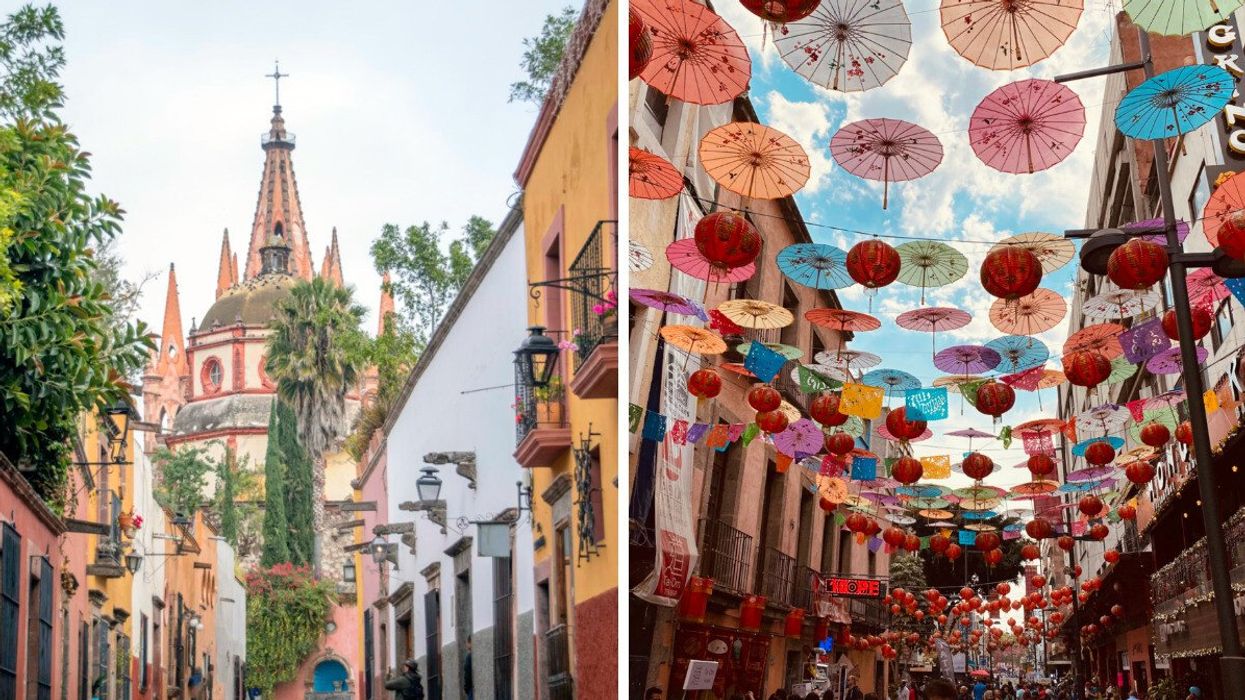
Canadians are urged to skip travel to these destinations in 2026.
If you're already dreaming of your next vacation and planning travel for 2026, you're not alone. Whether it's an iconic city, a beautiful national park, or a once-in-a-lifetime trip to see "the last true wilderness," there's no shortage of incredible destinations calling your name.
But before you start booking those flights, there's a list you should see. Travel publication Fodor's has just released its annual "No List" for 2026, featuring eight destinations that might already be on your radar.
These aren't obscure, dangerous locations you've never heard of. Instead, they're bucket-list favourites, and places that have likely flooded your Instagram feed and topped travel guides.
So what landed these popular destinations on the "no travel" list? It turns out that being too desirable comes with consequences that many travellers don't consider before they go. These spots are breathtakingly beautiful and culturally significant — but the very things that make them so appealing are also putting them at risk.
According to Fodor's, the problems featured on the No List for 2026 (overtouristed sites, fragile ecosystems, communities struggling to stay afloat) affect destinations worldwide when tourism is prioritized above everything else.
It's worth noting that Fodor's doesn't advocate for boycotting these destinations altogether, as this can hurt local economies and often doesn't actually address the root issues. Instead, the No List is meant to encourage travellers to think twice about their choices and consider the impact of their trips before taking them.
Here's a closer look at the full No List for next year:
Antarctica
Why it's popular: Antarctica is an ultimate bucket-list destination, and is considered by some to be "the last true wilderness on Earth" with calving glaciers, pristine landscapes, and unmatched wildlife.
Why you should pass: The continent received 120,000 visitors from 2023 to 2024, with that number projected to double by 2033. According to Fodor's, Antarctica's fragile environment can't sustain high tourism numbers, but there are currently no caps on visitation.
What's more, growing numbers of unregulated vessels are bypassing voluntary industry standards, and experts warn the region is shifting from ecotourism toward mass tourism.
The Canary Islands, Spain
Why it's popular: The Canary Islands are a year-round paradise with volcanic landscapes, stunning beaches, and warm weather. It's a favourite among Europeans looking for sun, sea, and vibrant nightlife without breaking the bank.
Why you should pass: The archipelago welcomed 7.8 million visitors in just the first half of 2025 alone, a 5% increase that has apparently pushed locals to their breaking point.
Thousands have marched through the streets under the banner "The Canaries have a limit," protesting soaring housing costs, mounting environmental strain, and traffic that's doubled commute times.
Tourism contributes more than a third of the islands' GDP, but 60% of homes are now vacation rentals, making it virtually impossible for young locals to rent or buy. Plus, water scarcity is reaching crisis levels, with 100 million litres of untreated sewage gushing into the sea daily, forcing beach closures due to fecal contamination.
Glacier National Park, US
Why it's popular: Glacier National Park is one of America's most treasured national parks, famous for its dramatic mountain landscapes, pristine wilderness, and the iconic Going-to-the-Sun Road that snakes through breathtaking scenery.
Why you should pass: The park is warming nearly twice as fast as the global average, according to Fodor's. Of the estimated 150 glaciers that ringed its peaks in the early 20th century, only 27 remain — and those are expected to disappear by 2030.
This urgency has sparked a surge in "last-chance tourism," with 300,000 more visitors in 2024 than in 2023. The influx is creating a sustainability paradox where increased visitation is contributing to the very degradation people are coming to witness.
Isola Sacra, Italy
Why it's popular: Isola Sacra is a quiet coastal district in Fiumicino, just 20 miles from Rome, offering a peaceful escape with traditional fishing huts and easy access to the capital.
Why you should pass: Italian authorities have approved plans for a massive new cruise port that will bring mega ships carrying up to 6,000 passengers. The planned port has faced fierce opposition from residents, as over 105 million cubic feet of sand would need to be extracted from the shallow seabed, devastating a protected natural area just 1,000 feet away.
Experts warn that dredging will exacerbate coastal erosion and pollute the coastline, while thousands of cruise passengers will overwhelm infrastructure that can't support them before funnelling into Rome — a city already struggling to handle 35 million tourists a year.
The Jungfrau Region, Switzerland
Why it's popular: The Jungfrau Region is home to the iconic Alpine villages of Grindelwald, Lauterbrunnen, Wengen, and Mürren, with towering peaks and the famous Jungfraujoch — dubbed "the Top of Europe." The stunning scenery and easy access via modern cable cars make it a dream destination for mountain lovers.
Why you should pass: More than 1 million people visited the Jungfraujoch in 2024 alone, up 5.1% from the previous year, with cable cars breaking attendance records.
The convenience of the Eiger Express — which whisks visitors to the glacier's edge in just 15 minutes — has turned the region into a rush-through experience where day-trippers use infrastructure without paying local visitor taxes. Plus, most consumption goes to the big railway company rather than to small local businesses.
Housing is becoming scarce as homeowners opt for lucrative Airbnb rentals over permanent residents. Meanwhile, the Aletsch Glacier, Europe's largest, has retreated more than 1.4 miles over the past 75 years.
Mexico City, Mexico
Why it's popular: Mexico City is a magnet for digital nomads and Canadian tourists alike, drawn by its world-class food scene, vibrant culture, and lower living costs than in North American cities.
Why you should pass: On July 4, 2025, large protests erupted against gentrification and rising rents, with some turning violent.
Airbnb listings have shot up 35% since the pandemic, with over 25,000 short-term rentals in the city, pricing locals out of their own neighbourhoods. Housing prices in areas like Polanco rose eightfold between 2000 and 2018, and communities like Condesa and Roma have been criticized as "neo-colonies" where wealthier outsiders reshape the landscape, creating cultural alienation. Even restaurant spice levels are being toned down for foreign palates.
New rules will cap short-term rentals to 180 nights a year — but not until after the 2026 FIFA World Cup, when landlords are expected to hike rents to capitalize on increased arrivals.
Mombasa, Kenya
Why it's popular: Mombasa, Kenya's oldest coastal city, is renowned as "the white and blue city" for its pristine tropical beaches, white sand, coconut palms, and protected natural reserves with unique wildlife. The UNESCO Heritage Site of Fort Jesus and Mombasa Old Town offer rich cultural experiences steeped in Swahili, Indian, and Arabian traditions.
Why you should pass: Kenya's tourism boom hit 2.4 million international arrivals in 2024, a 14.6% surge, with cruise travel alone bringing a 164% rise in port traffic.
Mombasa now hosts 70% of tourists visiting Kenya's coast, and it's buckling under the pressure. The city lacks data on tourist carrying capacity, meaning officials have no clear understanding of how many visitors it can accommodate without harming ecological health. Depleting resources, overcrowding, littered beaches, and raw sewage flowing directly into the ocean are killing mangroves and fish.
Youth unemployment sits at a staggering 44%, and in April, an armed gang of 50 youths attacked cruise ship tourists in the streets. Fodor's says officials have prioritized tourism over local needs, establishing a special security unit for tourist centers while crime runs rampant elsewhere.
Montmatre
Why it's popular: Paris's hilltop village of Montmartre is famous for its picturesque cobbled streets, the iconic Sacré Coeur basilica, and artistic heritage. The narrow streets escaped the city's 19th-century makeover, maintaining a quaint village atmosphere with cabarets, caricaturists at Place du Tertre, and claims to Paris's first bistro.
Why you should pass: Some 11 million visitors now throng the basilica each year — more than the Eiffel Tower. Even previously quiet spots on the northern flank of the hill now teem with tourist shops and crowds that locals find "unlivable."
Real estate prices have skyrocketed by 35% in just the past year, and local culture is disappearing — the neighbourhood pétanque club was evicted from its 50+ year space in 2024 to make way for a luxury hotel.
Massive roadworks as part of a pedestrianization project are expected to stretch over "several months and even several years," and while officials claim they're giving the neighbourhood back to residents, locals aren't buying it.
Fodor's No List for 2026
- Antarctica
- The Canary Islands
- Glacier National Park
- Isola Sacra
- The Jungfrau Region
- Mexico City
- Mombasa
- Montmartre
Before you get going, check out our Responsible Travel Guide so you can be informed, be safe, be smart, and most of all, be respectful on your trip.
AI tools may have been used to support the creation or distribution of this content; however, it has been carefully edited and fact-checked by a member of MTL Blog's Editorial team. For more information on our use of AI, please visit our Editorial Standards page.