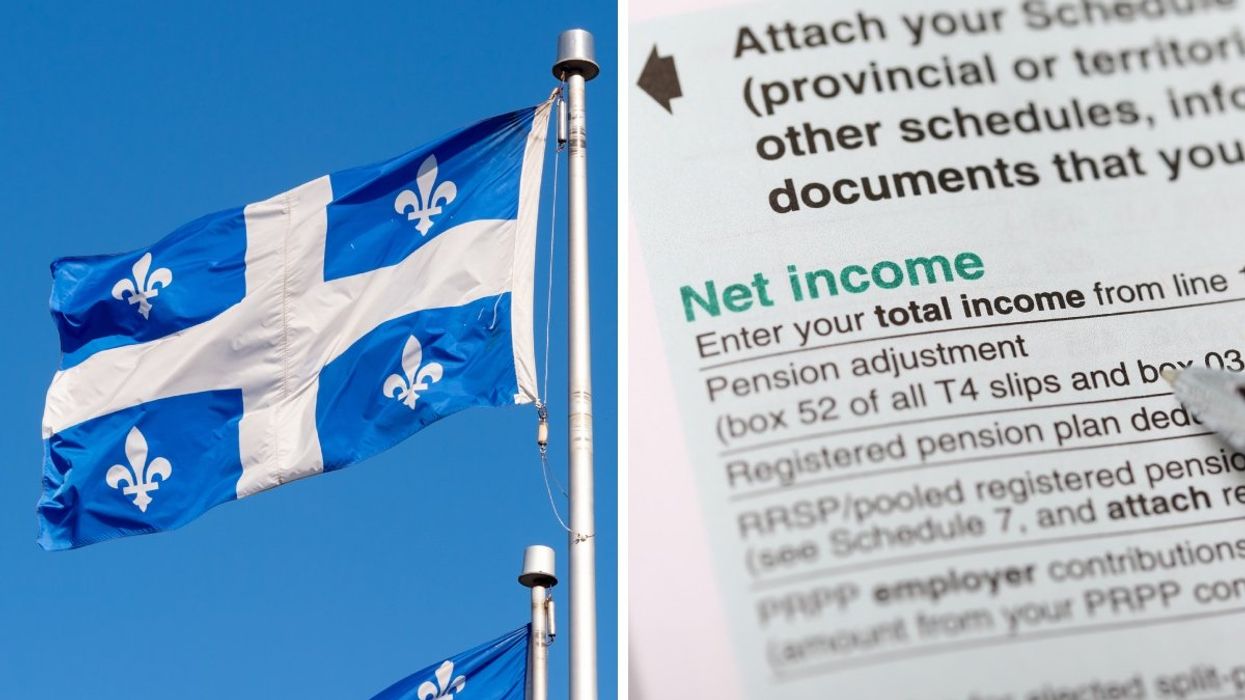
You can now earn more money in Quebec before paying any provincial income tax
The province's basic personal amount has increased for 2026.
The change was confirmed during the economic update presented on November 25 by Finance Minister Éric Girard.
Quebec isn't exactly known for having the lowest taxes in Canada.
But there's at least one bit of good news for taxpayers in the province this year: the amount of money you can earn before paying provincial income tax just went up.
The province's basic personal amount has increased for 2026, which means you can now earn $18,952 annually before Revenu Québec starts taking its cut. That's up from $18,571 last year — an increase of $381.
The change was confirmed during the economic update presented on November 25 by Finance Minister Éric Girard. This threshold gets adjusted every year to reflect economic changes and provide some relief to Quebec households.
What this means for your wallet
If your annual income stays below $18,952, you owe absolutely nothing to Revenu Québec in provincial income tax. It's a useful number to know when you're calculating what you actually owe or planning your finances.
For anyone in a position to take advantage of this — maybe you're still living at home, or your expenses are low — this could be a good opportunity to maximize your savings. That extra $381 could go toward your RRSP (Registered Retirement Savings Plan), TFSA (Tax-Free Savings Account), or even your FHSA (First Home Savings Account).
Quebec's 2026 tax brackets
While you're thinking about taxes, it's worth understanding how Quebec's tax brackets work this year. Here's how they break down:
- 14% on income up to $54,345
- 19% on income between $54,346 and $108,680
- 24% on income between $108,681 and $132,245
- 25.75% on income over $132,245
Here's the important part: everyone pays the same rate on the first bracket of income. Only the money you earn beyond each threshold gets taxed at the higher rate.
For example, if you earn $60,000 this year, the first $54,345 gets taxed at 14%. Only the remaining $5,655 gets taxed at 19%. Your entire salary is never taxed at the highest rate — just the portion that exceeds each threshold.
This article is adapted from "Le salaire annuel que tu peux gagner sans payer d'impôt au Québec a augmenté cette année," which was published on Narcity.