The WHO Declared Monkeypox A Global Health Emergency
This is sounding all too familiar...😳🦠
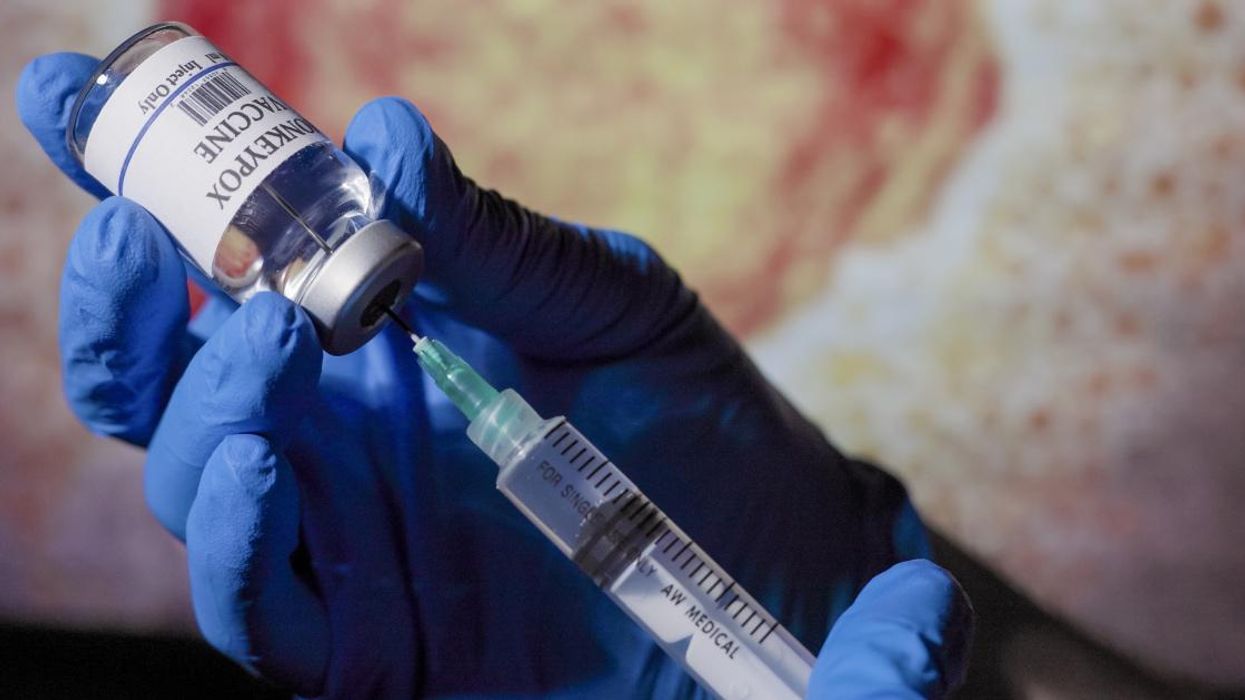
Doctor filling a syringe with monkeypox vaccine.
On July 23, the World Health Organization officially declared monkeypox a global health emergency.
The last time the WHO declared an outbreak a global health emergency was with COVID-19 on January 30, 2020. However, things are looking different with monkeypox.
"Since early May 2022, cases of monkeypox have been reported from countries where the disease is not endemic, and continue to be reported in several endemic countries," the WHO stated.
The emergence of the disease across many countries globally sparked concern amongst health professionals. The WHO convened last month to discuss whether or not the multi-country monkeypox outbreak represented a public health emergency of international concern.
At that time, Dr. Tedros, Director-General of the World Health Organization, stated that the committee "resolved by consensus that the monkeypox outbreak did not represent a public health emergency of international concern."
Well, that's no longer the case.
As of 10:16 a.m. EST Saturday, the WHO declared the monkeypox outbreak a global health emergency. The decision was made after the WHO considered five elements in deciding whether an outbreak constitutes a public health emergency of international concern.
These criteria include information provided by countries regarding the spread of the disease, the advice of the Emergency Committee, scientific principles, evidence and other relevant information, and the risk to human health, Dr. Tedros said during the LIVE broadcast this morning.
So, what exactly is a global health emergency?
According to the World Health Organization, a public health emergency of international concern (PHEIC) is defined as "an extraordinary event which is determined to constitute a public health risk to other States through the international spread of disease and to potentially require a coordinated international response."
A PHEIC is declared when a situation becomes: serious, sudden, unusual or unexpected. Additionally, a global health emergency is also declared when a disease carries implications for public health beyond the affected State's national border; and may require immediate international action, the WHO states.
Despite declaring a global health emergency, Dr. Tedros stated that the outbreak can be stopped with the right strategies in the right groups.
"For the moment this is an outbreak that is concentrated among men who have sex with men, especially those with multiple sexual partners," Dr. Tedros said.
"It’s therefore essential that all countries work closely with communities of men who have sex with men, to design & deliver effective information & services, and to adopt measures that protect both the health, human rights & dignity of affected communities...Stigma and discrimination can be as dangerous as any virus."
This article's cover image was used for illustrative purposes only.