Going to the US this summer? Canada's travel advisory has a warning you shouldn't ignore
Don't let the new rules spoil your vacation. 🛃
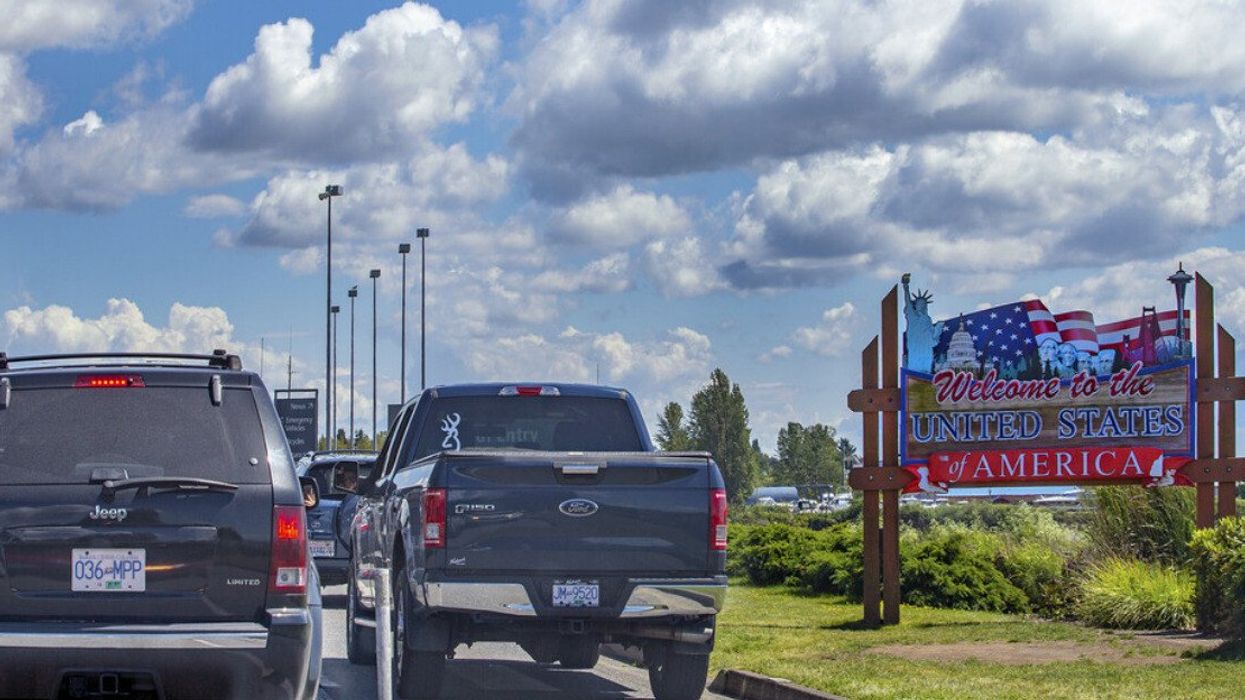
American border agents are allowed to search your phone, laptop, or tablet without reason.
Thinking of heading to the United States this summer? Well, whether you're flying out or driving down, Canada's latest travel advisory might give you pause.
Although the government's U.S. advisory was updated on June 3, the real shift happened back in April. That's when Canada first warned travellers about ramped-up U.S. border scrutiny — including a major new policy that limits foreign stays to 30 days unless you're officially registered with the U.S. government.
According to the advisory, American border agents are also allowed to search your phone, laptop, or tablet without reason, and you might be asked to hand over passwords. If you refuse, "they may seize your device," the government warns. "The border agent could also delay your travel or deny entry."
But that's not all. U.S. officers have what Canada calls "significant discretion," meaning they can ask for proof of your travel plans, financial situation, and ties to Canada — like a job, school enrollment, or permanent address.
As for the new 30-day rule, Canadians and other foreign nationals must be registered with U.S. Citizenship and Immigration Services (USCIS) if they plan to stay longer. If you skip that step, you could face fines, penalties, or even misdemeanour charges. You can check your registration status by looking up your I-94 admission record on the U.S. Customs and Border Protection (CBP) website.
What's driving the warning? Tensions between the two countries have been on the rise in the past few months, with trade disputes and pointed remarks from U.S. President Donald Trump stirring up backlash.
Combined with the new entry rules, that's already had an impact: in April, Statistics Canada reported that transborder travel fell by nearly 6% compared to last year, including a 10.1% drop in U.S.-bound passengers at Montréal-Trudeau.
But if you're still planning a trip, the government recommends putting your phone on airplane mode before reaching the border and being cooperative. Refusing to comply could lead to denied entry or even detention.
Canada's full U.S. travel advisory can be found here.
AI tools may have been used to support the creation or distribution of this content; however, it has been carefully edited and fact-checked by a member of MTL Blog's Editorial team. For more information on our use of AI, please visit our Editorial Standards page.
- Canada's least-liked premiers have been revealed and it's not looking great for Legault ›
- The world's top cities were just ranked and Montreal fell surprisingly flat ›
- 7 vacation hotspots you might be surprised to find on Canada's travel warning list ›
- Quebec has 5 'unofficial' nude beaches: Here's what you should know before stripping down - MTL Blog ›
- Gas could finally get cheaper in Quebec now that this 28-year-old rule is gone - MTL Blog ›
- It just got harder to afford a home in Montreal — And it's not because prices went up - MTL Blog ›
- Montreal-Trudeau Airport is about to become a construction site and travel could get messy - MTL Blog ›
- Some Canadians may soon have to pay a $340 fee to enter the U.S. - MTL Blog ›