Legault & Dubé Explained Why Quebecers Are Still Struggling To Flatten The COVID-19 Curve
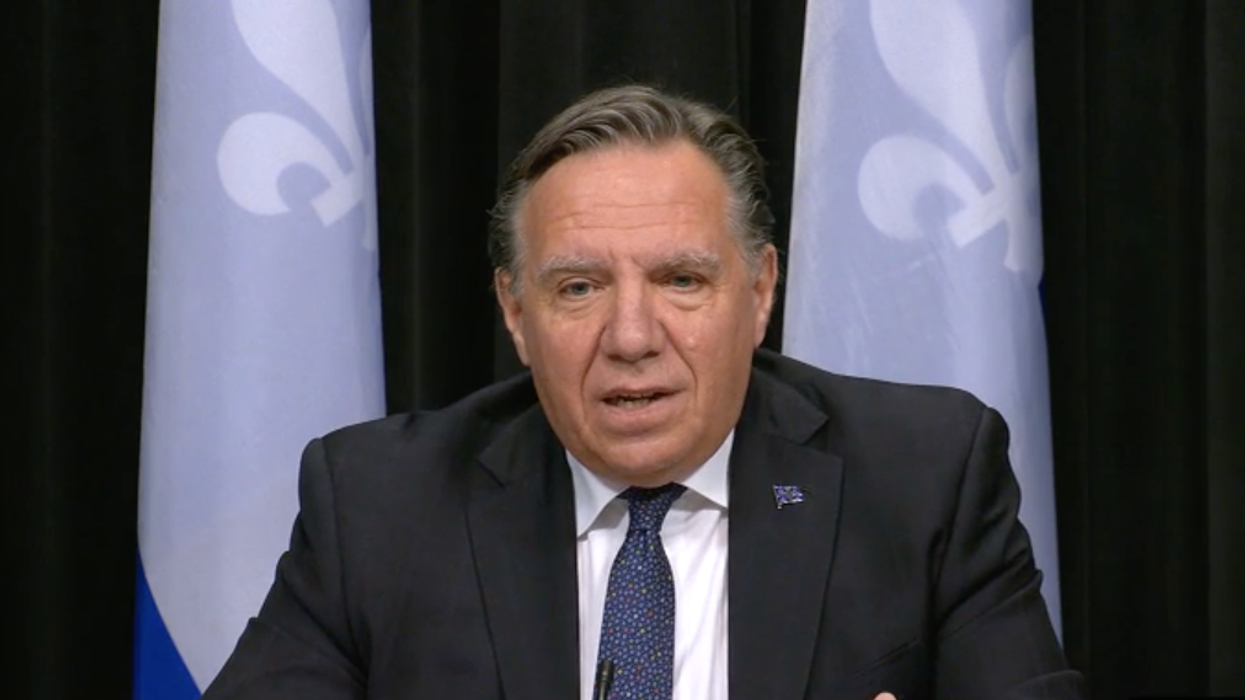
In a press conference on October 22, Premier François Legault and Health Minister Christian Dubé were asked the question that's top of mind for most Quebecers right now: "Why aren't we able to bring the curve down? What's the main problem right now?"
Earlier in the press conference, Legault clarified that while COVID-19 numbers have stabilized in the province, there is no indication that the situation is going to improve in Quebec any time soon.
Dubé explained that the solution to breaking the second wave of COVID-19 in Quebec can be boiled down to simple math.
Editor's Choice: Legault Says The Government Will Soon Decide What To Do Once The 28 Days Are Up
“
There's no secret. To reduce the number of new cases, you have to reduce the number of contacts. We don't seem to be able to do that, at the moment.
Premier François Legault
The October 16 INSPQ report of COVID-19 projections in Quebec outlined that, pre-pandemic, most of the province's residents had about eight social contacts per day.
In the first-wave of confinement, contacts were reduced to three per person per day, said Dubé.
However, in recent months — including during October's 28-day red zone closures — social contacts have gone back up to approximately six per person per day.
"The INSPQ said: You managed to stop the wave, but if you want to go down, it would take an additional 25% reduction in contacts," Dubé explained.
In other words, according to the government, the key is to reduce our social contacts — specifically, by 25%.
Legault gave some suggestions for how to do this:
"Don't ask yourselves how you can get around the [public health] recommendations. Ask yourselves how you can eliminate all [social] contact that isn't absolutely necessary," he said.
He also advised people to work from home as much as possible.