Canada has issued travel advisories for 8 popular destinations, including the US and Mexico
Visiting countries with active advisories can impact the validity of your travel insurance! 👀
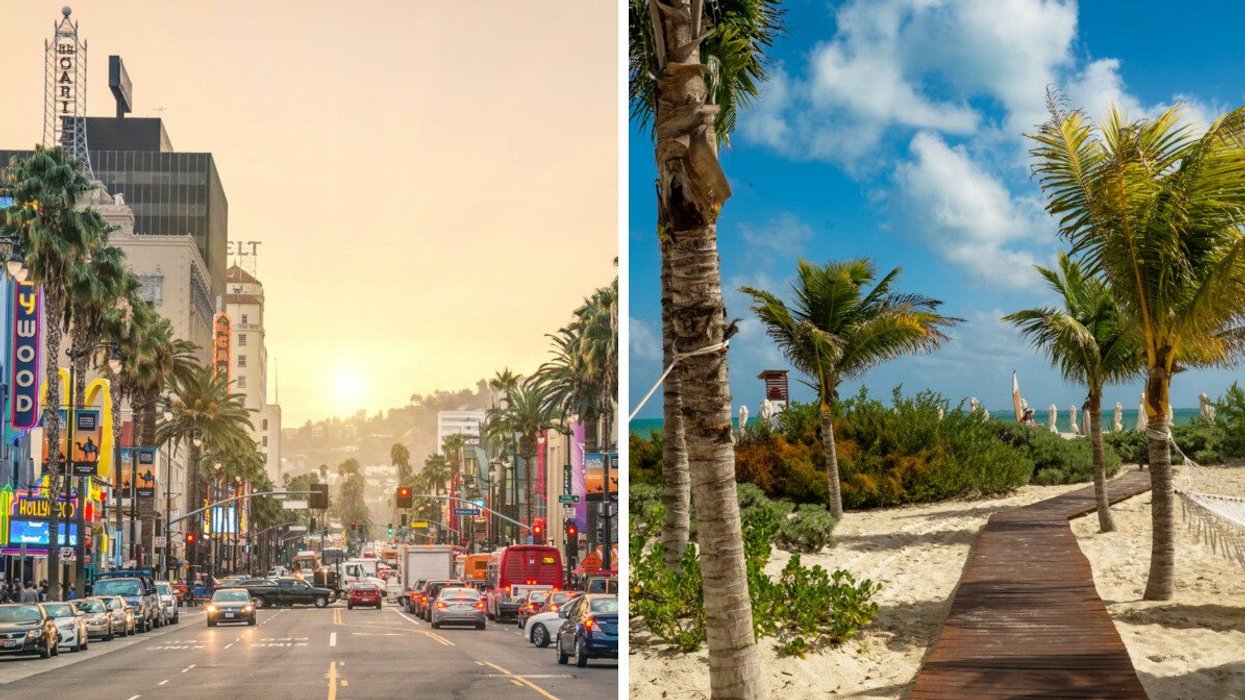
Canada has issued updated travel warnings for multiple sun destinations.
Before you lock in flights or finalize your summer travel plans, it's worth checking Canada's latest travel advisories for your destination — including for FIFA World Cup 2026 host cities in the U.S. and Mexico.
The Government of Canada regularly updates its travel warnings to flag safety risks that could affect your trip, from serious violent crime and terrorism threats to infrastructure failures and civil unrest.
This month, advisories are in place for some of the most popular destinations among Canadian travellers — spanning the Caribbean, Europe, and North America.
Canada's travel advisory system uses four risk levels: "Take normal security precautions," "Exercise a high degree of caution," "Avoid non-essential travel," and "Avoid all travel."
These advisories aren't meant to stop you from travelling altogether, but they do help travellers understand what to expect and how to prepare. Plus, in some cases, travelling to regions with active travel advisories may affect your travel insurance, so it's essential to understand the potential risks.
Here's what travellers need to know about the latest Canadian travel advisories for the U.S., Mexico, Cuba, the Bahamas, and more.
Mexico
Last Updated: March 31, 2026
Risk Level: Exercise a high degree of caution in Mexico due to high levels of criminal activity and kidnapping.
Details: Mexico is set to host several FIFA World Cup 2026 matches, drawing hundreds of thousands of visitors this summer — but the Government of Canada is urging travellers to prepare carefully before heading south.
Crime levels are high across the country. The advisory warns against non-essential travel to several states, including Chihuahua, Sinaloa, Guerrero, Colima, Michoacán, and parts of Jalisco — areas where cartel violence and armed clashes occur regularly, sometimes without warning.
Even in major cities and tourist zones, violent incidents have taken place at hotels, restaurants, and nightclubs.
Kidnappings are a serious concern, including express kidnappings where victims are forced to withdraw cash from ATMs.
Armed robberies and carjackings are also reported frequently, and some criminals have posed as police officers or taxi drivers.
If you're crossing from the U.S., the Canadian government recommends flying rather than using land border crossings, where criminal activity is common.
Petty crime like pickpocketing and bag-snatching is also widespread, particularly in crowded areas, transit hubs, and during large public gatherings — exactly the kind World Cup matches will draw.
The Bahamas
Last Updated: April 21, 2026
Risk Level: Exercise a high degree of caution in The Bahamas due to high rates of crime, especially in Nassau and Freeport.
Details: The Bahamas draws Canadians year-round with its turquoise waters and resort-lined beaches, but crime is a real concern — particularly on the islands of New Providence and Grand Bahama.
Nassau and Freeport see the highest rates of crime, including armed robberies, burglaries, fraud, and sexual assault. Incidents happen in and around resort areas, cruise terminals, and tourist zones, and not just after dark.
The Bahamas also has a high murder rate, though most violent incidents occur in non-tourist neighbourhoods in downtown Nassau.
Petty theft — pickpocketing, bag snatching, and beach theft — is common and increases during holidays and festivals. Don't leave belongings unattended, avoid carrying large amounts of cash, and be cautious at ATMs.
Officials advise sticking to busy tourist areas, avoiding isolated beaches, especially after dark, and keeping doors and windows locked at all times.
Dominican Republic
Last Updated: April 22, 2026
Risk Level: Exercise a high degree of caution in the Dominican Republic due to crime.
Details: The Dominican Republic's beaches and all-inclusive resorts remain a favourite among Canadians seeking sun, but crime is a concern across many parts of the country.
Drive-by robberies are particularly common, with thieves on motorcycles or scooters snatching bags from pedestrians or reaching into vehicles stopped at traffic lights. Incidents happen at resorts, airports, beaches, and on public transit. Hotel room safes and checked luggage have also been targeted.
Violent crime, including armed robberies and assaults, occurs mainly after dark in large cities. Criminals target cars on the road, so arrange to arrive and depart during daylight hours where possible. The Government of Canada says police responses can be slow, especially outside tourist areas.
Sexual assaults have been reported at major resorts and hotels, sometimes involving staff. Avoid secluded areas, even on resort grounds, and be cautious with strangers.
Card skimming and ATM fraud are also common — use machines inside banks or businesses, cover your PIN, and monitor your accounts closely.
The border region with Haiti, particularly around Dajabón, is unstable and best avoided entirely. Land and sea borders there are closed to travellers.
Italy
Last Updated: April 22, 2026
Risk Level: Exercise a high degree of caution in Italy due to the threat of terrorism.
Details: Italy is a top destination for Canadians, but the Government of Canada warns of an ongoing threat of terrorism across Europe, and attacks in Italy cannot be ruled out.
Potential targets include government buildings, places of worship, airports, transport hubs, and public areas frequented by tourists, including restaurants, bars, shopping centres, markets, and hotels.
Canadian officials say travellers should be especially vigilant during sporting events, religious holidays, and public celebrations. Increased police and military presence is expected in public places and at major landmarks during these periods.
Petty crime is also widespread in Italy, according to the Government of Canada. Pickpocketing and bag snatching occur frequently in crowded tourist areas, on buses, trains, and at stations and airports.
Thieves commonly use distraction tactics — spilling drinks, engaging in conversation, or offering unsolicited help. Criminals on scooters snatch bags from pedestrians and from inside cars stopped at traffic lights.
Jamaica
Last Updated: April 23, 2026
Risk Level: Exercise a high degree of caution in Jamaica due to the high level of violent crime, particularly outside tourist areas.
Details: Violent crime, including armed robbery and murder, remains an issue in large cities in Jamaica — particularly in parts of Kingston, Montego Bay, St. Catherine, and the town of May Pen, where gang activity is widespread, and firearms are commonly involved. Police are present in tourist areas and resorts, though assaults and robberies still occur there.
Police checkpoints are common across the country, including along the A1 North Coast Highway. Always carry a valid ID, cooperate with officers, and allow extra time to reach your destination.
Sexual assaults at tourist resorts have been reported too, sometimes carried out by resort staff. Smaller or isolated properties carry a higher risk — gated and guarded compounds are considered the safest accommodation option.
The Government of Canada notes that same-sex sexual acts are illegal in Jamaica. 2SLGBTQI+ travellers have experienced harassment and physical abuse and should carefully consider the risks before travelling.
France
Last Updated: April 23, 2026
Risk Level: Exercise a high degree of caution in France due to the threat of terrorism.
Details: France's terrorism threat level is currently at its highest — level 3, "urgence attentat" (attack emergency) — under the French government's Vigipirate plan. Terrorists have carried out attacks in France before, and additional attacks can occur.
Potential targets include government buildings, schools, places of worship, cultural venues such as concert halls and nightclubs, airports, transport hubs, and public areas frequented by tourists — particularly in Paris. Travellers should be especially vigilant during sporting events, public celebrations, major political events, and religious holidays.
Increased police and military presence is deployed permanently in public areas under Operation Sentinelle.
Petty crime is also frequent, particularly in large cities. Pickpocketing, bag snatching, and phone theft are common at tourist sites, in hotel lobbies, on public transport, and along international rail routes, including Paris-Brussels-Amsterdam and Paris-London. Thieves often work in groups and use distraction tactics.
Violent crime against tourists is less common but does occur, particularly around major tourist attractions, near railway stations, on RER trains, and outside bars and clubs at night.
United States
Last Updated: April 23, 2026
Risk Level: Take normal security precautions in the United States.
Details: The United States currently carries Canada's lowest advisory level — Take Normal Security Precautions — but there are still specific risks worth knowing ahead of the FIFA World Cup 2026, which the U.S. is co-hosting from June 11 to July 19.
The Government of Canada notes that mass gatherings can turn violent at any time, cause traffic and transit disruptions, and become targets for terrorism.
It adds that in large crowds, stampedes may occur, and local authorities may impose curfews with little notice. Scammers and pickpockets also use large gatherings to target tourists.
According to the U.S. travel advisory, mass shootings occur across the country, too, and while tourists are rarely involved, there is a risk of being in the wrong place at the wrong time. Firearm possession rates are high, and it is legal in many states to openly carry firearms in public.
Criminal activity related to drug trafficking is more frequent near the U.S.-Mexico border in California, Arizona, New Mexico, and Texas.
Cuba
Last Updated: April 20, 2026
Risk Level: Avoid non-essential travel to Cuba due to worsening shortages of fuel, electricity, and basic necessities including food, water, and medicine.
Details: The Government of Canada has raised Cuba's advisory to Avoid Non-Essential Travel. All Canadian airlines have suspended service to Cuba until further notice, and while commercial flights through international airlines remain available, they may become limited on short notice.
Cuba is facing chronic and severe shortages of food, bottled water, medication, fuel, and hard currency. Resorts are also affected, though the timing and extent of impacts are difficult to predict. Most large hotels use generators, but fuel shortages may limit their use, affecting food service, lighting, and running water.
Daily scheduled power cuts are in place to reduce strain on the electrical grid, but unexpected nationwide blackouts can also occur and last more than 24 hours.
Ground transportation also remains severely disrupted. Public transit and taxis are frequently unavailable, and some travellers have been stranded with rental cars due to fuel shortages. Long lineups at gas stations have led to altercations.
If you do decide to travel to Cuba, make sure to take all medications, toiletries, and extra supplies with you. Keep water, food, and fuel on hand, and ensure you have a complete emergency kit at all times.
Wherever you're going this spring, stay informed and stay safe!
Before you get going, check out our Responsible Travel Guide so you can be informed, be safe, be smart, and most of all, be respectful on your trip.
AI tools may have been used to support the creation or distribution of this content; however, it has been carefully edited and fact-checked by a member of MTL Blog's Editorial team. For more information on our use of AI, please visit our Editorial Standards page.
- Canada-US border rules: Everything Canadians need to know before taking a trip down south ›
- Quebec's minimum wage is rising this week — Here's exactly what it means for your paycheque - MTL Blog ›
- Canadians who bought cars between 1998 & 2017 can still claim cash from this $50M settlement - MTL Blog ›
- Ominous sirens will blare throughout Montreal next week — Here's why you shouldn't panic - MTL Blog ›
- Canada has issued travel warnings for 7 European hotspots due to 'the threat of terrorism' - MTL Blog ›
- 10 things Canadian tourists should know before visiting Mexico - MTL Blog ›
