Since the start of the year, Quebec's Ministère de l'Agriculture, des Pêcheries et de l'Alimentation (MAPAQ) has published more than 800 court judgments against food establishments across the province, covering everything from restaurants to grocery stores to producers.
Montreal businesses make up a big chunk of that list, and seven restaurants in particular stand out for the sheer size of their penalties, with cumulative MAPAQ fines ranging from $8,000 to $16,900 since January.
The violations tend to repeat across cases and fall into one of the following categories: unsanitary premises, poorly maintained equipment, food stored under unsafe conditions, and in a couple of cases, operating without a valid permit altogether. A few of these restaurants were hit with four or five separate judgments within just a few months of each other.
There's one important caveat before we dive in: these are judgments handed down by the Montreal Municipal Court since the start of 2026, not inspections that took place this year. The legal process takes time, so every violation listed below was actually observed back in 2024 or 2025.
That's why each entry includes both the inspection date and the judgment date.
Le Platana
Address: 361 Rue Bernard O., Montreal, QC
Total fines: $16,900
This one involves two separate cases and six fines in total.
The first case, totalling $9,400, centred on unclean premises, equipment, materials and utensils used for food preparation, storage and service. A $3,000 fine was tied to a December 19, 2024 infraction (judged March 2, 2026), a $3,600 fine to an October 8, 2024 infraction (judged February 9, 2026), and a $2,800 fine to a May 15, 2024 infraction (judged February 5, 2026).
The second case, worth $7,500, dealt with the premises not being free of contaminants, pollutants or pests, including insects, rodents, or their droppings. That broke down into a $3,000 fine for a December 19, 2024 infraction (judged March 2, 2026), another $3,000 fine for an October 8, 2024 infraction (judged February 9, 2026), and a $1,500 fine for a July 17, 2024 infraction (judged February 5, 2026).
Restaurant Kim Fung
Address: 1111 Rue Saint-Urbain, Montreal, QC
Total fines: $13,200
Three separate cases add up here, totalling four fines.
The biggest, $8,200 combined, was tied to the premises not being free of contaminants, pollutants or pests. That included a $4,200 fine for an August 22, 2025 infraction (judged June 8, 2026) and a $4,000 fine for a February 6, 2025 infraction (judged March 11, 2026).
A separate $4,000 fine covered unclean premises, equipment and utensils, tied to that same August 22, 2025 infraction. A smaller $1,000 fine was also issued for failing to keep a hot perishable product at an internal temperature of at least 60°C until it reached the consumer, tied to a September 16, 2025 infraction judged May 26, 2026.
Vago Italien
Address: 1336 Avenue Greene, Westmount, QC
Total fines: $11,500
This case stands out because both infractions were observed during the same visit, even though the judgments landed on different dates.
The bigger fine, $10,000, was for operating a restaurant without holding a valid permit, tied to a March 4, 2025 infraction judged May 4, 2026. A second fine of $1,500 covered equipment and surfaces that weren't properly corrosion-resistant, non-absorbent or free of cracks and loose particles, from the same March 4, 2025 infraction, judged separately on March 9, 2026.
Mimimelon
Address: 2069 Rue Saint-Louis, Montreal, QC
Total fines: $11,200
Three infractions make up this total.
The premises not being free of contaminants, pollutants or pests accounted for $9,200 combined, split between a $4,000 fine for a May 23, 2025 infraction and a $5,200 fine for a July 22, 2025 infraction, both judged within weeks of each other in May and June 2026.
A separate $2,000 fine was issued for failing to keep heat-sensitive perishable products at or below 4°C until delivery to the consumer, tied to that same May 23, 2025 infraction.
Les Grillades de Steeve
Address: 9032 Boulevard Saint-Michel, Montreal, QC
Total fines: $10,000
Two infractions, evenly split.
A $5,000 fine was issued for operating without a valid permit, tied to a March 13, 2025 infraction judged June 5, 2026. Another $5,000 fine covered the premises not being free of contaminants or pests, tied to a January 27, 2025 infraction, judged the same day as the first.
Restaurant Siciliana
Address: 1264 Rue Stanley, Montreal, QC
Total fines: $8,000
Two separate $4,000 fines make up this total. The first was for the premises not being free of contaminants or pests, tied to a February 4, 2025 infraction judged March 18, 2026. The second covered unclean premises, equipment and utensils, tied to an August 21, 2025 infraction judged February 4, 2026.
La Belle Province
Address: 1663 Avenue Dollard, Montreal, QC
Total fines: $8,000
Both fines here stem from the same underlying issue: unclean premises, equipment, materials and utensils used for food preparation and service. A $4,000 fine was tied to a June 3, 2025 infraction (judged June 8, 2026), and another $4,000 fine to a May 13, 2025 infraction (judged May 8, 2026).
MAPAQ fines are issued by the Montreal Municipal Court and published in the provincial food safety registry. The violations listed don't necessarily reflect current conditions at these establishments, and in many cases, months or even years can pass between the date of the infraction and the official publication of the judgment, as the legal process runs its course. When a restaurant remains open, MAPAQ says that typically means the issues have been corrected.
You can explore the entire registry of food violations on MAPAQ's official website.
This story was inspired by the article "De 8 000$ à 16 900$ d'amendes : 7 restos à Montréal sanctionnés par le MAPAQ en 2026" which was originally published on Narcity.
AI tools may have been used to support the creation or distribution of this content; however, it has been carefully edited and fact-checked by a member of MTL Blog's Editorial team. For more information on our use of AI, please visit our Editorial Standards page.
 Coalition Avenir Quebec Leader Christine Frechette speaks during a press conference alongside local candidates during a campaign stop, in Montreal, on Thursday, Oct. 1, 2026.THE CANADIAN PRESS/Christopher Katsarov
 Prime Minister Mark Carney speaks during a fireside chat with the Chief Executive Officer of PSP Investments, Deborah Orida, in Toronto, on Tuesday, Sept. 15, 2026.THE CANADIAN PRESS/Nathan Denette
 Conservative Leader Pierre Poilievre, delivers a speech on national unity in Edmonton on Tuesday, Sept. 29, 2026.THE CANADIAN PRESS/John Ulan
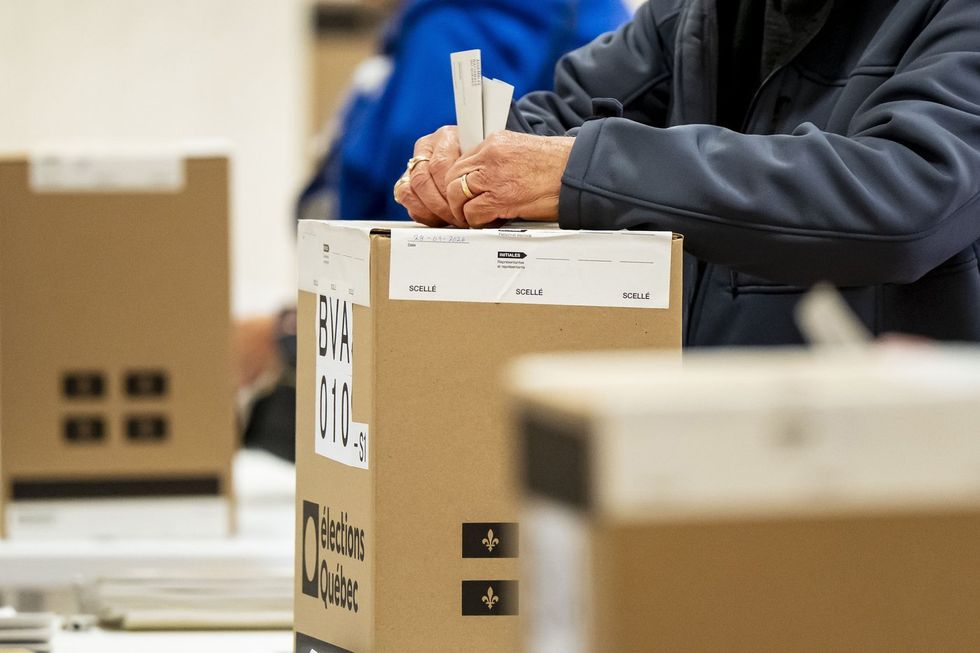 People cast ballots on the second day of advance voting, ahead of provincial elections, in Montreal on Monday, Sept. 28, 2026.THE CANADIAN PRESS/Christopher Katsarov
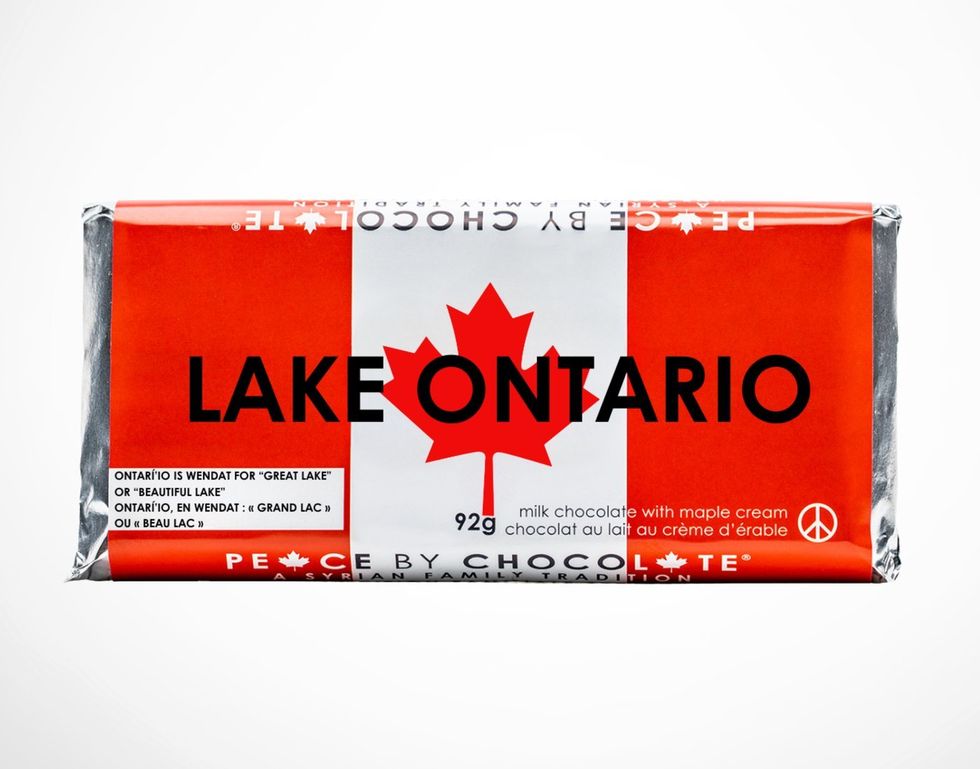 Peace by Chocolate made a Lake Ontario chocolate bar, as shown in this handout photo, after U.S. president Donald Trump changed the body of water's name to Lake America.THE CANADIAN PRESS/Handout-Peace by Chocolate handout (Mandatory credit)